
 中文 (中国)
 Français
 Deutsch
 हिन्दी
 日本語
日本語
Vietnam Visa Photo Requirements 2026: Size, Background & Examples
Applying for a Vietnam visa in 2025? One of the most common reasons applications get delayed or rejected is incorrect visa photos. Whether you’re applying for a Vietnam e-visa, Visa on Arrival, or a traditional visa, your photo must follow strict standards.
This guide explains Vietnam visa photo requirements in a simple and clear way — including size, background, technical specs, and real examples — to help you avoid errors and get approved faster.
Vietnam Visa Photo Requirements at a Glance
Below is a quick overview of the essential rules for Vietnam visa photos.
Required size (4×6 cm vs digital upload)
-
Vietnam e-visa: Digital photo required for online submission.
-
Visa on Arrival (VOA): Two printed photos sized 4×6 cm (or 2×2 inches accepted in most airports).
-
Embassy visa: Usually requires 4×6 cm printed photos.
Accepted file formats
-
JPEG or JPG is the official recommended format for e-visas.
-
PNG is sometimes accepted but not guaranteed.
When a physical photo is required
You need printed photos if:
-
Applying for Visa on Arrival
-
Submitting documents at a Vietnamese embassy/consulate
-
Using certain urgent visa-on-arrival services
More details: /arrival-procedure-vietnam-airport/
Vietnam e-Visa Photo Size & Technical Specs
For online e-visa applications, exact photo specifications matter.
Exact pixel size (for online upload)
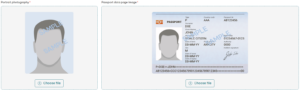
Vietnam’s e-visa system accepts a portrait photo with:
-
Minimum size: 400×600 pixels
-
Recommended: 600×900 or 720×960 pixels
-
Aspect ratio: 2:3 portrait orientation
See full guide: /vietnam-evisa-photo-requirements/
File size limit
-
Maximum file size: 2MB
-
The system may reject larger files or compressed low-quality images.
Facial ratio (eye line, head height)
For a correct biometric portrait:
-
Head height should cover 70–80% of the photo
-
Eyes must be between 1.0–1.4 inches from the bottom of the image
-
Face must be centered and clearly visible
Background Requirements
Color background rules
-
Background must be solid white
-
No textures, shadows, or gradients
-
Light gray may be accepted but is not recommended
Shadows, lighting & clarity
-
No shadows on the face or background
-
Even lighting on both sides of the face
-
High resolution, no pixelation or blur
-
No reflections from glasses
Clothing guidelines (no uniforms, no hats)
-
Avoid uniforms or camouflage clothing
-
No hats, caps, or head coverings (except for religious reasons)
-
Avoid white shirts on white backgrounds (low contrast)
Acceptable vs Unacceptable Photos (With Descriptions)
Good examples
✔ Clear, sharp, well-lit image
✔ Solid white background
✔ Neutral expression, mouth closed
✔ Eyes open and looking directly at the camera
✔ No accessories blocking the face
Rejection examples
✘ Glare or reflections on glasses
✘ Tilted head or selfie angles
✘ Hair covering the eyes
✘ Filters, beauty apps, or skin-smoothing
✘ Shadow on background
✘ Incorrect size or wrong orientation
Vietnam Visa Photo Requirements for Children & Babies
Special rules for infants
-
Babies can lay on a white sheet; parents must not appear in the photo
-
Eyes should be open (newborns are sometimes accepted if not fully open)
-
Head must be centered and visible
Tips for taking photos of toddlers
-
Use natural daylight near a window
-
Place the child against a plain background
-
Take multiple shots to ensure a neutral expression
Digital vs printed photos for children
-
E-visas: Digital JPEG upload
-
VOA/Embassy: Bring two printed 4×6 cm photos
How to Take Your Vietnam Visa Photo at Home
DIY lighting setup
-
Use two lights (left and right) to avoid shadows
-
Stand 0.5–1m away from the wall
-
Avoid strong overhead lights that cause shadows under the chin
Smartphone camera tips
-
Use the rear camera (better quality than the selfie camera)
-
Shoot in portrait orientation
-
Avoid wide-angle distortion
-
Clean the lens before shooting
Editing rules (what’s allowed, what’s forbidden)
Allowed:
-
Cropping
-
Adjusting brightness and contrast
-
Minor background cleanup
Forbidden:
-
Changing facial features
-
Filters, smoothing, whitening
-
Removing wrinkles or reshaping face
-
Altering skin tone
Common Mistakes That Lead to Photo Rejection
Wrong background
Textured, colored, or non-solid backgrounds are not accepted.
Glass reflections
If wearing glasses:
-
Avoid tilt
-
Use soft lighting
-
Anti-reflective coating helps
Filters or beauty apps
Any AI filter or beautification = automatic rejection.
Incorrect cropping
Face must be centered with proper head height.
See common upload issues: /vietnam-visa-application-errors/
Photo Requirements for Visa on Arrival (If Applicable)
Printed photos needed at airport
-
Most airports require two (2) printed 4×6 cm photos
-
If unavailable, airport services can take new photos for you
Cost of taking photos at airport
-
Typically $3–$5 USD per photo
-
Some airports may charge higher for urgent processing
Emergency options
If you arrive without photos:
-
Get photos taken at the Landing Visa counter
FAQs (Photos & Uploading Issues)
1. Can I smile in my Vietnam visa photo?
A slight natural smile is fine, but no teeth and no exaggerated expressions.
2. Can I wear glasses?
Yes, if the frames do not cover your eyes and there is no glare.
3. Can I upload a selfie for my e-visa?
No — selfies are usually rejected due to angle distortion.
4. Do I need a printed photo for Vietnam e-visa?
No, e-visas require a digital upload only.
5. Does Vietnam accept a 2×2 inch photo?
For VOA, 2×2 inches is accepted if you don’t have 4×6 cm photos.
Need a Guaranteed-Approval E-visa?
Vietnam E-visa Fast provides:
-
Urgent 1–24 hour e-visa processing
-
Guaranteed correct photo formatting
-
Error-free document submission
-
24/7 travel support